Explained in 120 seconds

Strong track record – First-quartile ranking within its peer group since 2011
Entrepreneur-driven approach – Focus on owner-led companies
Style-agnostic – Across Value, GARP and Growth
Indexed performance (as at: 12.10.2026)
NAV: EUR 564.00 (11.10.2026)
Rolling performance (12.10.2026)
| Bellevue Entrepreneur Europe Small | MSCI Europe ex UK Small | |
| 21.06.2025 - 21.06.2026 | 22.72% | 16.03% |
| 21.06.2024 - 21.06.2025 | 4.55% | 7.95% |
| 21.06.2023 - 21.06.2024 | 19.62% | 12.80% |
| 21.06.2022 - 21.06.2023 | 9.67% | 5.08% |
Annualized performance (12.10.2026)
| Bellevue Entrepreneur Europe Small | MSCI Europe ex UK Small | |
| 1 year | 22.72% | 16.03% |
| 3 years | 15.35% | 12.21% |
| 5 years | 6.33% | 5.10% |
| 10 years | 9.60% | 8.90% |
| Since Inception p.a. | 10.76% | 10.16% |
Cumulative performance (12.10.2026)
| Bellevue Entrepreneur Europe Small | MSCI Europe ex UK Small | |
| 1M | 1.69% | -0.40% |
| YTD | 10.64% | 7.84% |
| 1 year | 22.72% | 16.03% |
| 3 years | 53.48% | 41.29% |
| 5 years | 35.92% | 28.23% |
| 10 years | 150.03% | 134.48% |
| Since Inception | 362.26% | 326.62% |
Annual performance
| Bellevue Entrepreneur Europe Small | MSCI Europe ex UK Small | |
| 2025 | 27.46% | 19.27% |
| 2024 | 3.53% | 2.83% |
| 2023 | 16.96% | 12.85% |
| 2022 | -22.93% | -20.60% |
Facts & Key figures
Investment Focus
The fund’s aim is to achieve capital growth in the long term, is actively managed and invests in small- and mid-cap, listed owner-managed companies in Europe where an entrepreneur or a founder family holds at least a 20% of a company’s voting rights. The qualities of these companies – a focused business model, Show moreShow less
Investment suitability & Risk
Low risk
High risk
General Information
| Investment Manager | Bellevue Asset Management AG |
| Custodian | CACEIS BANK, LUXEMBOURG BRANCH |
| Fund Administrator | CACEIS BANK, LUXEMBOURG BRANCH |
| Auditor | PriceWaterhouseCoopers |
| Launch date | 30.06.2011 |
| Year end closing | 30. Jun |
| NAV Calculation | Daily "Forward Pricing" |
| Cut of time | 15:00 CET |
| Management Fee | 0.90% |
| Subscription Fee (max.) | 5.00% |
| Performance Fee | 10.00% (with High Water Mark) |
| ISIN number | LU0631859062 |
| Valor number | 13084174 |
| Bloomberg | BFLESIE LX |
| WKN | A1JG2G |
Legal Information
| Legal form | Luxembourg UCITS V SICAV |
| SFDR category | Article 8 |
Key data (31.05.2026, base currency EUR)
| Beta | 0.92 |
| Volatility | 13.60 |
| Tracking error | 4.82 |
| Active share | 89.45 |
| Correlation | 0.94 |
| Sharpe ratio | 0.95 |
| Information ratio | 0.19 |
| Jensen's alpha | 2.05 |
| No. of positions | 44 |
Portfolio
Top 10 positions
Market capitalization
Geographic breakdown
Breakdown by sector
Benefits & Risks
Benefits
- Above-average top line growth driven by high innovation and strong pricing power.
- Higher operating margins on the back of high market share ("Champion in the niche") combined with good cost discipline.
- More conservatively financed, lower debt exposure and a higher risk capacity compared to non-family businesses.
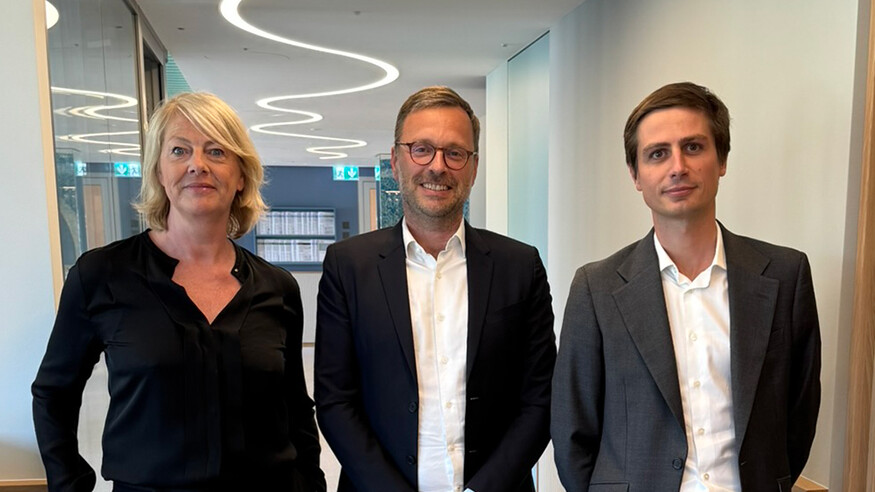
- Multi-award-winning management team with a long and successful track record investing in owner-run firms.
- Entrepreneurs for entrepreneurs – the Bellevue Group is itself an owner-run company with the majority of shares held by employees.
Risks
- The fund actively invests in equities. Equities are subject to price fluctuations and so are also exposed to the risk of price losses.
- Shares in smaller businesses are generally traded in lower volumes and are subject to bigger price fluctuations than larger enterprises.
- The fund invests in foreign currencies, which means a corresponding degree of currency risk against the reference currency.
- The fund may invest a proportion of its assets in financial instruments that might under certain circumstances have a relatively low level of liquidity, which can in turn affect the fund’s liquidity.
- The fund may engage in derivatives transactions. The increased opportunities gained come with an increased risk of losses.
Review / Outlook
European SMID caps, as measured by the MSCI Europe Small Cap ex-UK Index, declined -2.8% in September. Renewed US–Iran hostilities and attacks around the Strait of Hormuz pushed oil higher in September, lifting inflation. Although the pressure stems largely from energy supply rather than strong demand, central banks chose to act against the risk of second-round effects. The ECB raised rates for the second time this year, and the Fed followed with its first hike since 2023. The hawkish turn triggered a broad bond selloff, pushing the 10-year Treasury yield above 5% and Bund yields to 17-year highs. Despite softer consumer sentiment, the euro area economy continues to prove resilient. The Eurozone Composite PMI rose to 53.1, its highest in more than three years, as manufacturing reached a fresh four-year high of 52.9 and services accelerated to 53.0. In terms of sectors, Information Technology (+2.9%), Energy (+2.1%) and Healthcare (-1.3%) performed best while Communication Services (-8.3%), Real Estate (-7.8%) and Materials (-3.9%) lagged the most.
Against this backdrop, the Fund (B-share, EUR) was down -2.5%, outperforming its benchmark by 32bps. year-to-date the Fund is up 8.6% with an outperformance of 141bps.
Top detractors in the month were Cloetta (-11.9%), Swissquote (-13.9%) and Hensoldt (-11.0%). Cloetta was weighed down by weak sentiment across confectionery peers after Lindt revised its guidance lower for the second time. We see limited read-across, as Lindt's issues are largely idiosyncratic, while Cloetta has continued to beat expectations this year. Swissquote entered September with weak momentum after the collapse of its H1 crypto revenues leading to a lower full-year guidance. Nevertheless, crypto currencies have stabilised and the investment case is pretty much de-risked as valuations have normalised. Hensoldt underperformed as hopes of progress in Ukraine peace talks weighed on the sector’s rearmament premium. Rising bond yields, alongside renewed political uncertainty in Germany, added pressure by challenging the durability of the fiscal-spending narrative.
Top contributors in the month were Tecan (+17.4%), CAF (+8.0%) and Inficon (+13.8%). Tecan benefitted from growing awareness of its AI partnerships with NVIDIA and Anthropic, positioning it as an enabler of autonomous labs. This was further underpinned by recovering biopharma demand after a muted period, potentially a signpost of customer adoption. CAF profited from positive earnings revisions after a 30% Q2 EBIT beat on the back of impressive Solaris numbers, their Polish electric and hybrid bus division. Also, the upcoming strategic plan and mid-term targets represent a positive catalyst. Inficon benefitted from a rotation into semiconductors as AI-driven demand signals and improving memory-market dynamics reinforced confidence in the sector’s capex outlook. Upcoming Q3 results should confirm the excellent momentum in its Semi division and could trigger another upward revision to its guidance, which we continue to view as conservative.
September brought some weakness in European equities and Small and Mid caps as rising bond yields and renewed inflation concerns outweigh resilient economic activity. Earnings and investment spending provide support, but financing costs make balance-sheet strength increasingly important. September’s flash eurozone PMI showed the strongest private-sector output growth since April 2023, with both manufacturing and services expanding. The ECB projected growth of 0.9% in 2026 and 1.4% in 2027. In the US, we are witnessing one of the strongest earnings cycle of modern history, led by tech and AI. European industrial, tech and real assets companies (45% of our universe) indirectly benefit from this growth shock as specialist suppliers. From a European perspective, the themes of sovereignty, energy security and electrification are also becoming crucial, benefiting the exact same enablers. European SMID caps should therefore remain resilient with a potential of further rerating as earnings growth is delivered.
Dokumente
Show moreShow less